










/ News

February 2, 2023
Vote Tied on the Delisting of Leacock House
On February 2nd, 2023, the Standing Policy Committee on Property and Development voted on the removal of Leacock House at 442 Scotia Street from the City of Winnipeg’s List of Historical Resources. Heritage Winnipeg’s Executive Director, Cindy Tugwell, was at the meeting while Councillor Ross Eadie appeared over Zoom, both to speak in opposition to the delisting of Leacock House. Natalie Smith, an area resident, submitted a letter and petition signed by 29 Scotia Heights residents, who are concerned about Marymound’s (the owner of Leacock House) proposed expansion plans, which include the delisting. Nancy Parker, the Executive Director of Marymound, spoke about the organization’s request to have Leacock House delisted. Councillor Sherri Rollins and Councillor Matt Allard voted in favour of delisting Leacock House, while Councillor Shawn Dobson and Councillor Evan Duncan voted against delisting. The issues will now be voted on by the Executive Policy Committee, which will make their recommendation to Council, who will have the final say on the fate of the historic home.
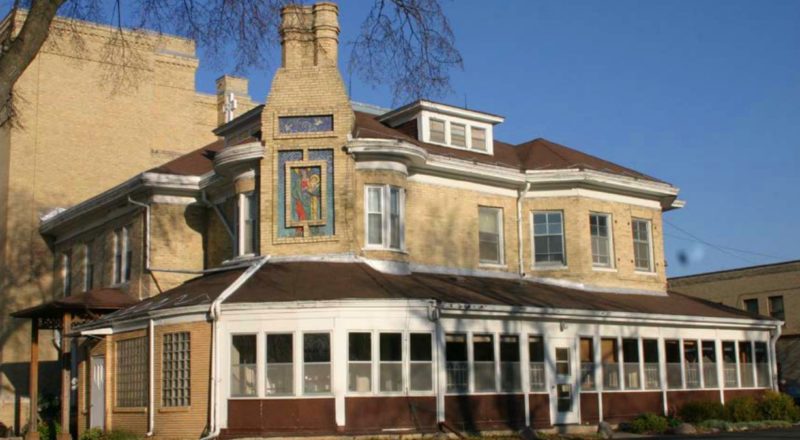
Leacock House is a two and a half storey Queen Anne Revival style home built in 1882 for Edward Philip Leacock, a businessman and politician. The Sisters of Our Lady of Charity of the Good Shepherd took over the house in 1911, using it to provide social services for girls sent from the juvenile court system. The house eventually became part of Marymound, a youth and family social services organization, with modifications made to the house and new buildings constructed on the property over the years. In 2012, Marymound sought a historical designation for Leacock House, which it was granted on July 9th of that year, protecting it from demolition or alteration of its character defining elements. In 2015, the Sisters of the Good Shepherd returned to Toronto, leaving behind their residence, Leacock House, which was then set to be redeveloped into a healing home for youth.
Since this plan was initially conceived in 2015, it has been realized that Leacock House is not a suitable structure to be adaptively reused as a healing home. While heritage buildings are no stranger to providing social services to the community both in Winnipeg and beyond, not all buildings are usable for all purposes. Given that Marymound has extensive property around Leacock House, it would then only make sense that a new, purpose built facility be constructed for the healing home elsewhere on the property. Should Marymound not have an immediate use for Leacock House, it could be properly maintained as a mothballed building, still at the heart of the historic facility until the right project is ready to redevelop it and let it serve the community once again.
Delisting an historic building is usually only considered when a building is no longer structurally sound and needs to be demolished out of safety concerns. In the case of Leacock House, with the plans to redevelop it into a healing home no longer viable, the request to delist it has been made so it can be demolished and replaced. The lines between the value of a historic building and the delivery of social services are being blurred, when they are really two separate issues. Heritage buildings are not standing in the way of important social services, nor are they at odds with the goal of serving the community. This is especially evident at Leacock House, where there is space to build a healing home elsewhere without laying waste to history.
Economic arguments can be made both for and against the conservation of built heritage, with some aspects of new construction costing more and some aspects of conservation costing more. But we cannot forget the environmental cost of demolishing heritage buildings, and the cost to the community. Built heritage is a public good that we all benefit from, a key building block in healthy cities – hence why we give these buildings special designations to protect them. Built heritage owners are the stewards of these precious resources, entrusted with both caring for and benefitting from them. If we limit ourselves to only thinking about the immediate needs of a heritage building owner today, there will always be justification to delist and demolish them, and we will be left with no history in a soulless wasteland of disposable buildings. It takes progressive and creative thinking to both serve the needs of the community now while making the best use of the resources we already have, ensuring future generations benefit from the hard work done today just as much as we do.
Heritage Winnipeg is grateful to Councillor Eadie for speaking in opposition to delisting Leacock House and to Councillor Dobson and Councillor Duncan who voted against delisting. It is expected that the issue will be voted on again at the February 14th Executive Policy Committee meeting. We encourage anyone who is concerned about the fate of Leacock House to register to speak at this meeting, making sure the voice of the community is heard. After serving those in need for over a century, Leacock House does not deserve to be flippantly demolished because a constructive solution could not be found to make the most of our irreplaceable historic resources.