










/ News

June 2, 2026
Farewell Arlington Bridge
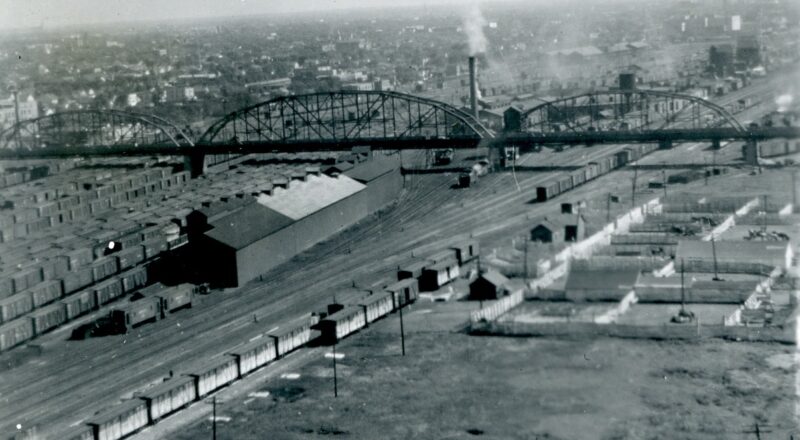
The story of Winnipeg’s Arlington Bridge is set to begin its final chapter. The bridge, which had connected the North End to central Winnipeg since 1912, was designed and built by the Cleveland Bridge and Engineering Company of Darlington, England. The structure is the city’s longest bridge, spanning the Canadian Pacific rail yards. The bridge connected Brown Street, on the north side, to Brant Street, on the south side. Brown and Brant were later renamed Arlington Street.
Originally built as part of a larger vision to improve north-south travel across the city, it was designed to carry streetcars, but its steep approaches made that impossible, resulting in the removal of these tracks in 1926.
Since its construction, an urban legend has circulated claiming the bridge was originally built to cross the Nile River in Egypt. The legend explains that the bridge was too short to span the Nile River, resulting in its sale to the City of Winnipeg at a bargain price. In 1946, newspapers reported the story, and it quickly became embedded in urban lore until it became accepted as truth. Even the city Engineer, William Hurst, backed the story, despite there being no existing concrete evidence.
The truth is, the Arlington Bridge is only two-thirds of the length that would be required to cross the Nile River and its two tributaries. Evidence suggests that the bridge was never built for the Nile, as it was 1,394ft (422m) too short. A more likely possibility is that the bridge was designed for the Nile but never built and was instead redesigned for Winnipeg’s needs. Modifying an existing design drawing is cheaper than creating a new one, thereby saving considerable money, which could account for the lower bid submitted to the city by the Cleveland Bridge Company. This scenario is a plausible alternative to the urban legend.
In 2000, there were three incidents in which trains derailed, striking the bridge piers and supports, causing a two-week closure in each case and requiring major structural repairs to these supports. The bridge has undergone numerous upgrades and repairs over the years. Despite significant corrosion issues, the bridge endures, though it was indefinitely closed in 2025.
Demolition of the bridge will begin in phases starting this month, with the southern section removed first, followed by the northern portion in 2027. The work will be done alongside CPKC rail operations below.
For many Winnipeggers, the Arlington Bridge was an important piece of the city’s history. Its demolition marks the end of an era.