











/ News

April 2, 2026
Congratulations Winners of the 2026 Annual Preservation Awards!
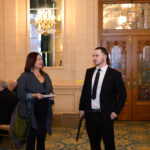
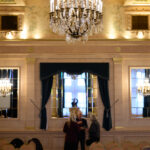
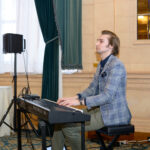
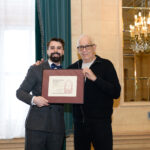
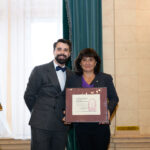
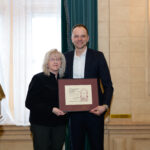
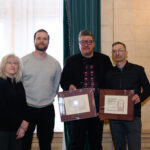
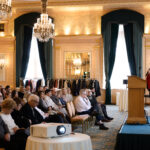
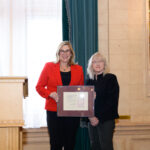
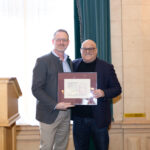
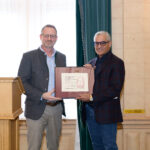
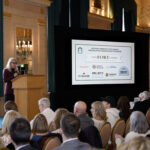
Heritage Winnipeg’s 40th Annual Preservation Awards were held on Wednesday, April 1st, 2026, celebrating the people and building projects that have gone above and beyond in the conservation of Winnipeg’s built heritage! The event took place in the stunning Crystal Ballroom on the seventh floor of the historic Fort Garry Hotel, looking out over Upper Fort Garry Heritage Provincial Park and towards The Forks National Historic Site. It was a wonderful chance to look back on four decades of successful heritage conservation projects that have helped build the city we call home. Awards were handed out to this year’s deserving winners, who have worked hard to make Winnipeg a vibrant and sustainable city filled with character! Guests also enjoyed a musical performance by Kenneth Ingram and a tour of the newly renovated spaces in the beautiful 1913 Fort Garry Hotel. It was a celebration of history, heritage and the people who make Winnipeg great!
Thank you to all the nominees and award winners for your dedication and passion for conserving Winnipeg’s built heritage! Thank you to the heritage experts who volunteered their time and knowledge to serve on our 2025 Judging Committee: Bob Eastwood, Neil Einarson, Lisa Gardewine, Matthew Jacobi, Roland Sawatzky, Dudley Thompson. Thank you to the Heritage Winnipeg Board Members for handing out awards and to Oleksandr Bezzemelnyl for photographing the event. Lastly, thank you to all the event sponsors and supporters who helped make Heritage Winnipeg’s 40th Annual Preservation Awards possible:

2026 Heritage Winnipeg Preservation Awards For Excellence














-
- 2026
Residential Conservation Award
Roslyn Square Apartments
40 Osborne Street
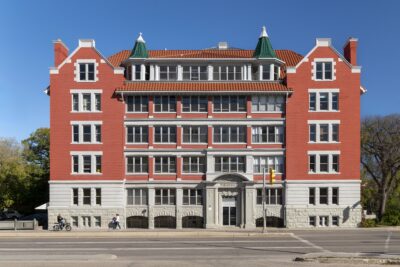
In 1909, Dr. Richard J. Mattice embarked on building a trendy new five-storey apartment block at 40 Osborne Street, the Roslyn Court Apartments. No expense was spared, resulting in one of the largest, most expensive and luxurious apartment blocks of its time in Winnipeg.
Irish architect William Wallace Blair designed the building, departing from more muted styles popular at the time. Instead, the Roslyn Court Apartments had bold Queen Anne Revival style facades with red brick, capped by a quirky roof line with red and green tiles. Inside, there were 26 two or three bedroom suits and 10 bachelor suites, with the largest suite being over 2,200 square feet.
Due to building codes at the time of construction, the Roslyn Court Apartments were made of fireproof stone and concrete, while light wells and an “L” shaped interior courtyard provide natural light and ventilation to each suite. Each suite was also designed with its own exterior entrance, with covered walkways crisscrossing the courtyard walls to provide access. The insistence on exterior exits also resulted in some long hallways and strangely shaped rooms. The layout of the suites is also made odd by the presence of small bedrooms for domestic staff and service staircases, both located off some of the kitchens.
The maze of hallways and walkways in the Roslyn Court Apartments tends to leave people feeling disoriented and unsettled. This has led to the rumours that the architect, Blair, was going mad, which was expressed through his labyrinth-like design. Perhaps his restless spirit remains as the tall, dark figure that has been seen stomping through the hallways and scaring tenants out of the laundry room?
Now called the Roslyn Square Apartments, much of the building is relatively unchanged since opening 117 years ago, including its copper cage elevator, one of the oldest elevators in Canada. The building’s exterior has recently been extensively conserved, including the foundation, roof tiles and window cladding. Additionally, over 500 uniquely shaped windows were refurbished along with wooden bannisters, panelling in common areas and suite doors, and the hardwood floors, ensuring this historic gem remains vibrant for generations to come.
Residential Conservation Award
Ches-Way Apartments
240 Chestnut Street
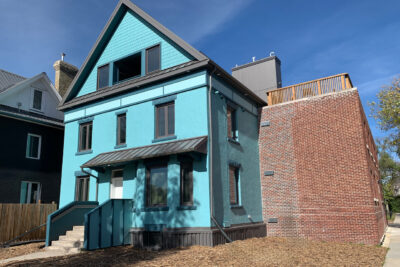
The Ches-Way Apartments started life as a two-and-a-half-storey wood-frame house at 796 Honeyman Avenue (originally called Broadway) designed by local architect George William Northwood. Built around 1905 for dry goods merchant Harry Patrick Naylor, it served as a home for various families, with two small additions being made. In 1924, the mortgage was foreclosed, causing the eight-room house to be put up for sale. It reopened later that same year, with six suites available for rent.
In 1928, the phrase “Ches-Way Apartments” first appeared in newspaper ads. The name seems to pay homage to the house’s location at the corner of Chestnut Street and Broadway (now called Honeyman Avenue), taking the “ches” from chestnut and “way” from Broadway.
Construction of the two and a half storey cast concrete apartment block behind the house at 240 Chestnut Street started in 1937, a time when almost no such buildings were being constructed due to the Great Depression. Containing nine suits, it was connected to the house by way of the basement. The expansion became known as the Ches-Way Apartments, while the house was rebranded as the Ches-Way Annex. The two separate names persisted until the 1970s, when the entirety of the structure became known as the Ches-Way Apartments.
A small fire in January of 2018 caused smoke and water damage to several suites. Evacuated, the building remained vacant until 2023, when it was purchased by architects Chris Knight and Tom Monteyne. They spent two years renovating the Ches-Way Apartments, which included putting a new roof on the house to accommodate an attic suite, a new roof terrace on the top of the apartment block, redesigned floor plans, and refinishing the interior. The Ches-Way Apartments, now with twelve larger suites, reopened to tenants once again in October of 2025.
Commercial Conservation Award
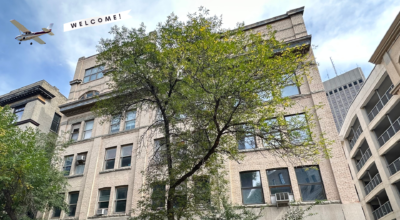
Saddlery Building
284 William Avenue
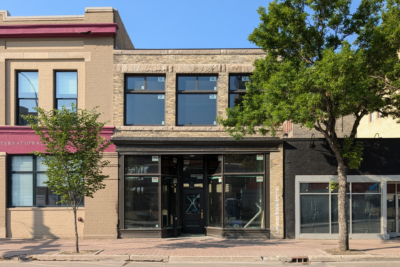
At the end of the 19th century, Archibald Francis Wright was operating a successful saddlery business at 284 William Avenue, a modest two-storey building overlooking Winnipeg’s original Market Square. With business booming, he decided to replace the building in 1903 with a new five-storey structure, the Saddlery Building. Designed by prolific architect James H. Cadham in the two-part commercial style, metal rods in combination with wooden beams were used on all floors for strength, a unique feature.
Much of the original structure of the Saddlery Building was damaged by a fire in 1906. According to reports, the fire started accidentally after a boy stepped on a match on one of the lower levels of the building, with flames spreading fast. Although Fire Hall No. 1 was less than a block away, allowing firefighters to quickly arrive on the scene, the fire gutted the top two floors and damaged the rest of the building.
The Saddlery Building underwent a facelift in 1936, having masonry repairs done and creating a recessed entrance flanked by vast display windows. While it looked good on the outside, the building was plagued with structural problems – floor heaving, masonry cracks, and a leaking roof. Concrete piles were added in 1945 to help shore up the building, and by 1962, the top three floors were removed. Unfortunately, this seems to have done little to help, as by 1971, it was reported that the elevator had been removed and only the first floor of the building was in use. By the early 2000s, the building was vacant.
After years of neglect, CentreVenture began stabilizing the building, completing the foundation, basement and interior structural restorations in the spring of 2022. Further repairs included custom glazing, restoring the front entrance and making it accessible, restoring the cornice, repairing the masonry, and salvaging interior heritage elements for use in future renovations. The result is a modernized Saddlery Building, ready to attract future tenants.
Commercial Conservation Award
Fort Garry Hotel
222 Broadway
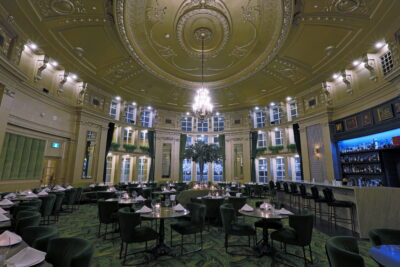
The Fort Garry Hotel at 222 Broadway opened its doors in December of 1913, built by the Grand Trunk Pacific Railway as a symbol of Winnipeg’s ambition and prosperity. Designed in the Châteauesque style, it remains one of the city’s most iconic landmarks—an enduring testament to craftsmanship, architectural excellence, and civic pride.
Over the past century, the Fort Garry has experienced both remarkable success and significant challenges. By the late 1980s, the building faced serious decline, raising questions about its future. What could have been lost instead became one of Winnipeg’s greatest examples of successful heritage conservation. Much of that success is owed to the vision, leadership, and dedication of Ida Albo.
Since the 1990s, Ida Albo has played a pivotal role in transforming the Fort Garry Hotel into a revitalized and thriving heritage destination. Her approach has never been about simple renovation, but rather thoughtful, historically sensitive restoration—ensuring that the building’s character-defining elements are not only preserved, but celebrated. Under her stewardship, the Fort Garry has undergone significant restoration and reinvestment.
One of the most notable examples is the restoration of the Palm Lounge—now known as the Oval Room Brasserie—where original proportions, plasterwork, and detailing were carefully reintroduced to reflect the hotel’s 1913 grandeur. Throughout the building, updates to guest rooms, lobby spaces, and public areas have been carried out with a clear respect for the hotel’s architectural integrity. These efforts demonstrate a deep understanding that heritage buildings must evolve to remain viable, but never at the expense of their identity.
Ida Albo’s work at the Fort Garry exemplifies a broader lesson in heritage conservation: that preservation is not about freezing a building in time, but about managing change in a way that honours its history. By prioritizing restoration over replacement, she has helped retain the craftsmanship, materials, and architectural language that define this landmark. Her leadership has ensured that the Fort Garry is not only preserved, but reactivated—continuing to serve as a vibrant gathering place in Winnipeg’s cultural and social life. This evening, as we recognize excellence in heritage preservation, the Fort Garry Hotel stands as a powerful example of what is possible when vision, investment, and respect for history come together.
Distinguished Service Award
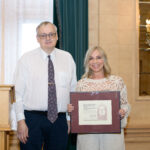
Laurie Goetz
115 Linden Avenue
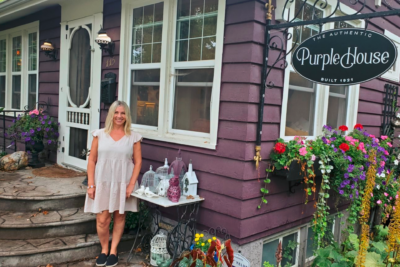
Laurie Goetz, long-time Owner of 115 Linden Avenue, is presented this award for her dedication to the outstanding maintenance of this historic 1921 home. Once home to the original owner of the Salisbury House chain and now known as the iconic Purple House. Also recognized for her outstanding community involvement, and commitment to sharing local history in North East Winnipeg.
Youth Award
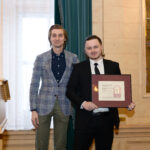
Jordan Makichuk
Heritage Volunteer & Advocate
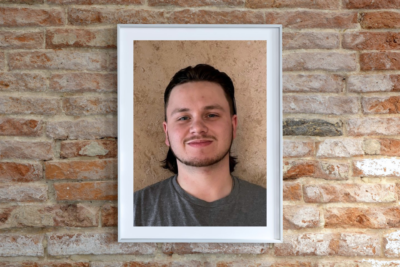
Jordan Makichuk is presented this award for his exceptional work and high level of dedication. He has been researching and documenting history for more than a decade, and contributing to the historic record and public conversations around preservation in Winnipeg and Manitoba. Having a meaningful impact with youth, and all age demographics in the heritage community.