










/ Blog

February 18, 2026
Lessons in Heritage Conservation and Preservation from the Fort Garry
Winnipeg’s architectural story is etched in grand stone façades, ornate interiors, and treasured heritage structures that narrate our past. Among them stands the Fort Garry Hotel, a century-old symbol of ambition, craftsmanship, and civic pride.
Today, as conversations about heritage preservation increasingly intersect with sustainability and climate responsibility, the Fort Garry offers a valuable lens for examining a broader issue facing historic buildings across the city: the choice between restoring and replacing historical architectural elements.
The Fort Garry Hotel: A Monument to Winnipeg’s Early Ambitions
When construction began in 1911 by the Grand Trunk Pacific Railway, Winnipeg was booming. Often referred to as the “Chicago of the North,” the city was a transportation and commercial hub linking eastern Canada with the Prairies and the West. Railways were the arteries of this growth.
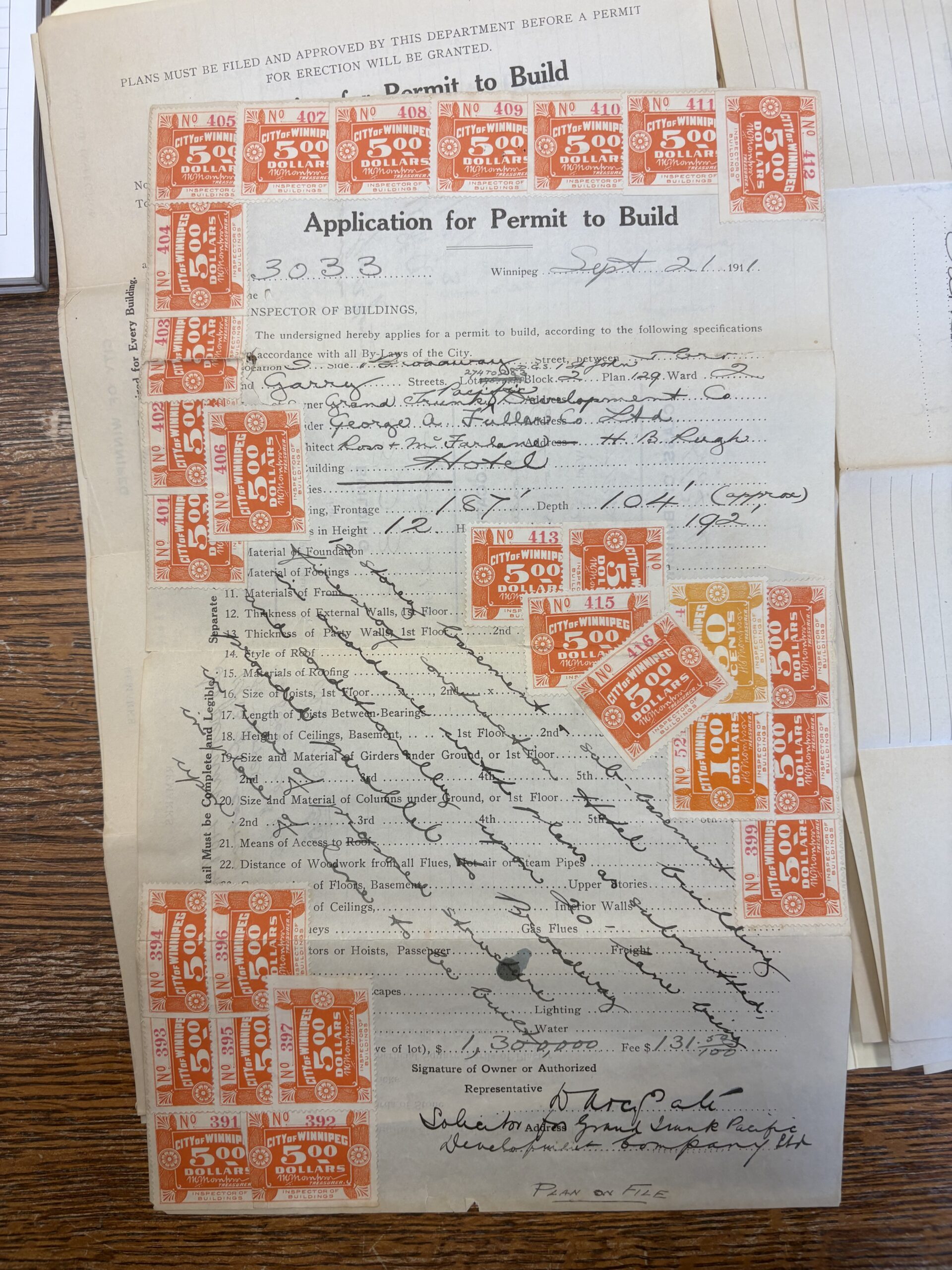
The “Application for Permit to Build” for the Fort Garry Hotel from September 21st, 1911.
Source: City of Winnipeg Archives in June 2016 (via Jordan Makichuk, Heritage Winnipg Board Member)
At a time when Canadian railway companies were constructing grand hotels in cities from Montreal to Vancouver, the decision to build the Fort Garry just one block from Union Station signalled enormous confidence in Winnipeg’s economic and social promise. Its proximity to the station meant arriving guests could easily see their elegant host building rise above the skyline—a stone promise of hospitality and prosperity.
Constructed of limestone—like the neighbouring railway station—and designed in the Châteauesque style, the Fort Garry blends French Gothic influences with Canadian grandeur. Its steeply pitched copper roofs, dormer windows, and ornate detailing reflect a commitment to elegance that was rare in the prairies at the time.
When it opened its doors on December 11, 1913, the Fort Garry instantly became a focal point of Winnipeg’s social and cultural life, hosting balls, banquets, and artists, athletes, and dignitaries from across the globe.
The Key Historic Eras of the Fort Garry’s Life
The hotel’s story over the past century can be divided into distinct chapters, each shaping its identity
and structure:
The Grand Trunk Pacific Railway Era (1904–1919)
The hotel’s inception and earliest years, reflecting national railway ambitions and Winnipeg’s economic rise.
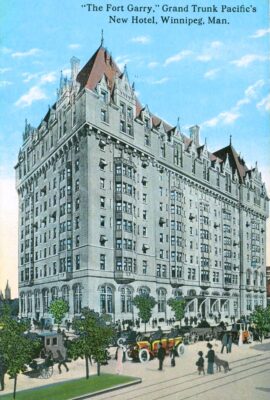
An undated postcard showing the Fort Garry Hotel at 222 Broadway.
Source: Rob McInnes Postcard Collection (public domain, via Winnipeg Public Library)
Canadian National Railway Years (1919–1979)
After the Grand Trunk’s nationalization into the Canadian National Railway, the Fort Garry continues to be an emblem of luxurious travel and public life.
The Harvard Investment Years (1979–1987)
Ownership and strategic changes, including challenges tied to aging infrastructure and rising maintenance needs.
The Malenfant Era (1987–1993)
A period for attempted revitalization and controversy, culminating in significant renovations.
Each era reveals not just architectural evolution but shifting expectations for what historic buildings can offer. As we talk about preservation today, it’s useful to recall how these structures have continually adapted without losing their core identity.
The Current Fort Garry Hotel: A Revived Heritage Jewel
While Winnipeg’s skyline has changed drastically since 1913, the Fort Garry has not only endured—it has thrived, thanks largely to the stewardship of local business leaders, especially Ida Albo and her partner, Richard Bel.
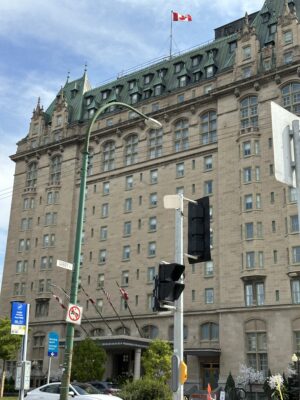
The Fort Garry Hotel at 222 Broadway on September 8th, 2023.
Source: Heritage Winnipeg
Ida Albo: Heritage Champion and Civic Builder
Ida Albo is a Canadian businesswoman, entrepreneur, and philanthropist who has owned and managed the Fort Garry Hotel since the 1990s. She holds degrees in economics and has lent her expertise to civic boards, charitable organizations, and urban revitalization initiatives in Winnipeg. In recognition of her contributions, she was appointed a Member of the Order of Canada in 2015 and inducted into the Manitoba Business Hall of Fame in 2018.
Under her leadership, the Fort Garry has been transformed from a struggling, dated property into a vibrant hospitality destination that honours its historic roots while meeting contemporary expectations. In 2009, the hotel was rebranded as the Fort Garry Hotel, Spa and Conference Centre.
Restoring Interiors with Historical Sensitivity
Recent restoration efforts at the hotel exemplify how heritage conservation can blend authenticity with hospitality excellence:
· The Palm Lounge (now known as the Oval Room Brasserie) was meticulously restored to reflect its 1913 appearance, including historically appropriate plasterwork and period-inspired furnishings.
· Lobby spaces and guest rooms have been updated with sensitivity to the building’s architectural character, preserving key design elements while incorporating modern comfort.
These efforts don’t simply “refresh” the hotel; they reconnect visitors with the spirit of early Winnipeg, inviting them to experience history rather than bypass it.
Why Historical Conservation and Preservation Matter (Especially for Winnipeg Homeowners)
Fort Garry is an incredible example of a Winnipeg landmark that has retained its original, character-defining architectural elements—proof that historic buildings can be preserved, functional, and relevant for generations to come. As a homeowner of a heritage property, you can take a similar approach.
During renovations, one of the most visually disruptive changes to historic façades is the removal of original wood windows and their replacement with modern vinyl alternatives. While replacement may seem like the simplest option, it often strips a home of the very details that give it character, authenticity, and long-term value.
Rather than defaulting to replacement, homeowners can work within the city’s heritage conservation and preservation framework to restore and rehabilitate original windows wherever possible. This approach helps retain the architectural integrity of your home, respects Winnipeg’s historic streetscapes, and often delivers comparable performance when paired with proper repairs, weather-sealing, and storm windows—without sacrificing the craftsmanship and proportions that define historic architecture.
After all, windows aren’t just functional openings—they’re architectural fingerprints that shape a building’s appearance, light, and character. Whether it’s limestone façades of grand hotels or the cozy frames of century-old homes, original windows hold stories in their craftsmanship.
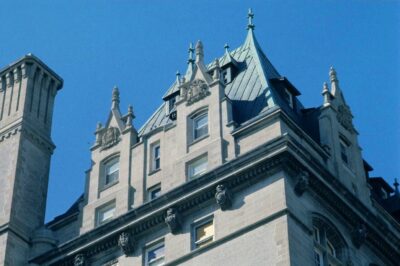
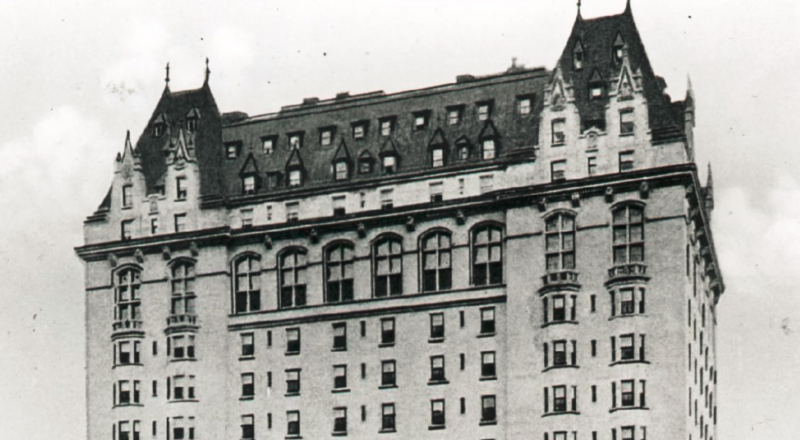
The distinctive windows of the Fort Garry Hotel at 222 Broadway, undated.
Source: Winnipeg Building Index (CC BY-NC 3.0, via University of Manitoba Libraries)
Beyond Glass and Wood: Windows as Heritage Elements
Historic windows are distinctive in several ways:
· They reflect original design intent and architectural style,
· Their proportions, muntin patterns, and detailing contribute to a building’s visual rhythm and heritage authenticity, and
· They often include craftsmanship that can’t be replicated affordably in modern replacements.
When windows are replaced en masse—especially with modern units that ignore heritage details— a building may lose a significant part of what made it historically meaningful in the first place.
Benefits of Historic Preservation vs. Window Replacement
Thinking about windows the same way we think about preserving grand ballrooms and ornate plasterwork may seem unexpected, but the environmental, economic, and cultural benefits of preservation are compelling.
1. Environmental Sustainability and Carbon Impact
Replacing windows generates substantial environmental costs: manufacturing new materials, transporting them, and disposing of old windows in landfills. These processes involve significant carbon emissions.
Historic windows, by contrast, already exist. The energy used to harvest the wood, fabricate the sash, and install the glass—known as embodied energy—has already been spent. Restoring these windows preserves that investment rather than discarding it.
In addition, life-cycle analyses consistently demonstrate that it can take several decades for replacement windows to “pay back” their carbon footprint—often longer than the expected lifespan of the replacements.
2. Longevity, Material Quality, and Cost-Effectiveness
Many historic windows in Winnipeg were built from old-growth wood—denser, more durable, and more rot-resistant than most modern lumber. With proper maintenance, these windows can last 100 years or more.
By contrast, many modern replacement windows are designed as sealed units. When one component fails, the entire unit often needs to be replaced, creating a cycle of recurring waste and expense.
While modern replacement windows may seem like a quick fix, their actual long-term cost savings (particularly in energy efficiency) can be marginal compared with restored historic windows that have been weather-sealed, repaired, and paired with storm windows.
Preservation may also qualify for heritage grants or incentives, reducing upfront costs.
3. Energy Performance: A Nuanced Reality
Heat loss in buildings is frequently caused more by air leakage than by the glass itself. Drafts often result from deteriorated weather-stripping, poor sealing, or the lack of storm windows, all issues that can be addressed without replacing the original window.
When historic windows are properly repaired, weather-stripped, and paired with interior or exterior storm windows, their thermal performance can rival that of modern replacements—without sacrificing heritage value.
4. Architectural Integrity and Streetscape Character
Windows define rhythm, proportion, and depth on a façade. Replacement windows often alter these qualities through thicker frames, different muntin patterns, or reflective glass.
Over time, widespread window replacement can subtly but significantly erode the visual cohesion of historic streets—a loss that’s difficult, if not impossible, to reverse.
Conclusion: Build on Winnipeg’s Heritage by Preserving Before Replacing
Winnipeg’s built heritage—from the Fort Garry’s limestone splendour to the remaining original windows in River Heights—isn’t just about individual buildings; it’s about the stories they carry and the identity they shape.
The Fort Garry Hotel reminds us that conservation and preservation matter—not only in grand public landmarks, but in the carefully crafted details that make historic buildings truly irreplaceable. For Winnipeggers, this presents a clear choice: when faced with aging historic windows, restoration should be considered first.
By choosing restoration whenever possible, we support environmental stewardship, protect the integrity of heritage, and preserve long-term value—honouring the past while strengthening Winnipeg’s cultural landscape for generations to come.
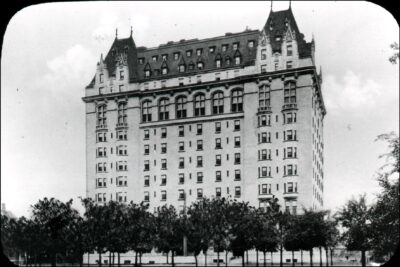
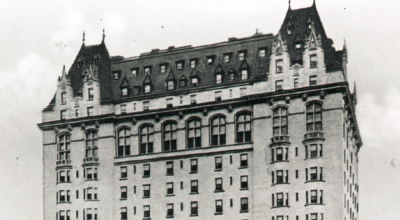
The Fort Garry Hotel at 222 Broadway, undated, from a lantern slide.
Source: Winnipeg Building Index (CC BY-NC 3.0, via University of Manitoba Libraries)
Heritage Winnipeg Update (June 2026)
Since this guest blog was first published, the Fort Garry Hotel has continued to demonstrate the importance of thoughtful heritage conservation in Winnipeg.
On April 1, 2026, the Fort Garry Hotel received the Commercial Conservation Award at Heritage Winnipeg’s 40th Annual Preservation Awards. The award recognizes the ongoing efforts to preserve and enhance one of Winnipeg’s most iconic heritage buildings while ensuring it remains an active part of the city’s cultural and social life.
In May 2026, the Fort Garry Hotel was reported as being listed for sale for the second time since 2019. The reports note that while no listing price has been publicly disclosed, interest in the property has been strong, and a sale is anticipated within the coming year.
The Fort Garry Hotel has proven to be the standard of how historic buildings can continue to function and adapt while preserving the character and craftsmanship that make them invaluable. Heritage Winnipeg would like to thank Ida Albo, one of the current owners and managing partner of the FGH, for her instrumental role in the ongoing preservation of this landmark heritage building. Heritage Winnipeg looks forward to seeing this landmark continue to serve Winnipeggers and visitors for generations to come.
THANK YOU TO THE SPONSOR OF THIS BLOG POST:

Guest blog by Matthew Jacobi, Heritage Winnipeg Board Member.