










/ News

August 6, 2026
City Gives Final Approval to Granite Way Housing Development
The City of Winnipeg has granted final approval for the proposed 12-storey, 110-unit housing development at 30 Granite Way, despite ongoing concerns raised throughout the approval process.
At its July 30th meeting, the City’s Property and Development Committee unanimously dismissed appeals related to the development. The project is being led by the University of Winnipeg Community Renewal Corporation. Half of the development’s 110 units are expected to remain at affordable rents for 99 years.
Heritage Winnipeg supports the creation of much-needed housing and recognizes the importance of increasing Winnipeg’s housing supply. However, the organization remains concerned about the process surrounding the Granite Way development, particularly a lack of transparency and inadequate public consultation.
Community stakeholders have raised questions about parking, planning for the site and the potential impact of the development on the neighbouring Granite Curling Club at 22 Granite Way.
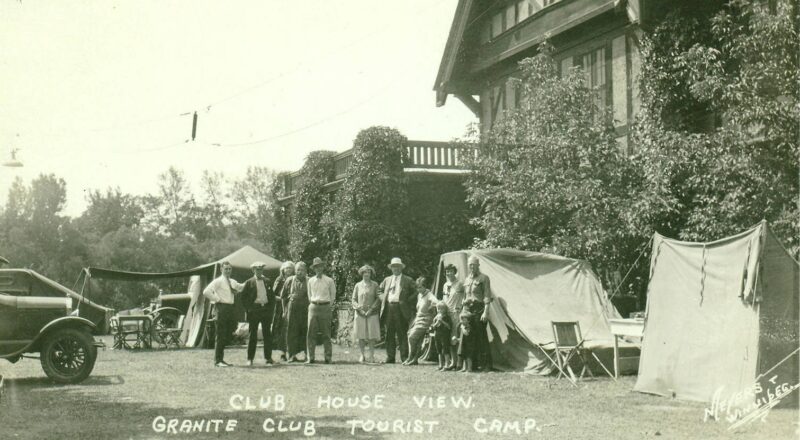
Established in 1880, the Granite is one of Winnipeg’s oldest sporting institutions. Its present clubhouse opened in 1912, giving the organization more than a century of history at the site. The club has argued that changes to parking associated with the new development could affect its long-term viability.
The City developed a plan intended to restore parking around the club, including adjustments to nearby parking areas. Club representatives, however, have maintained that the proposed measures do not adequately address their concerns. The dispute over parking has consequently become one of the central issues surrounding the development.
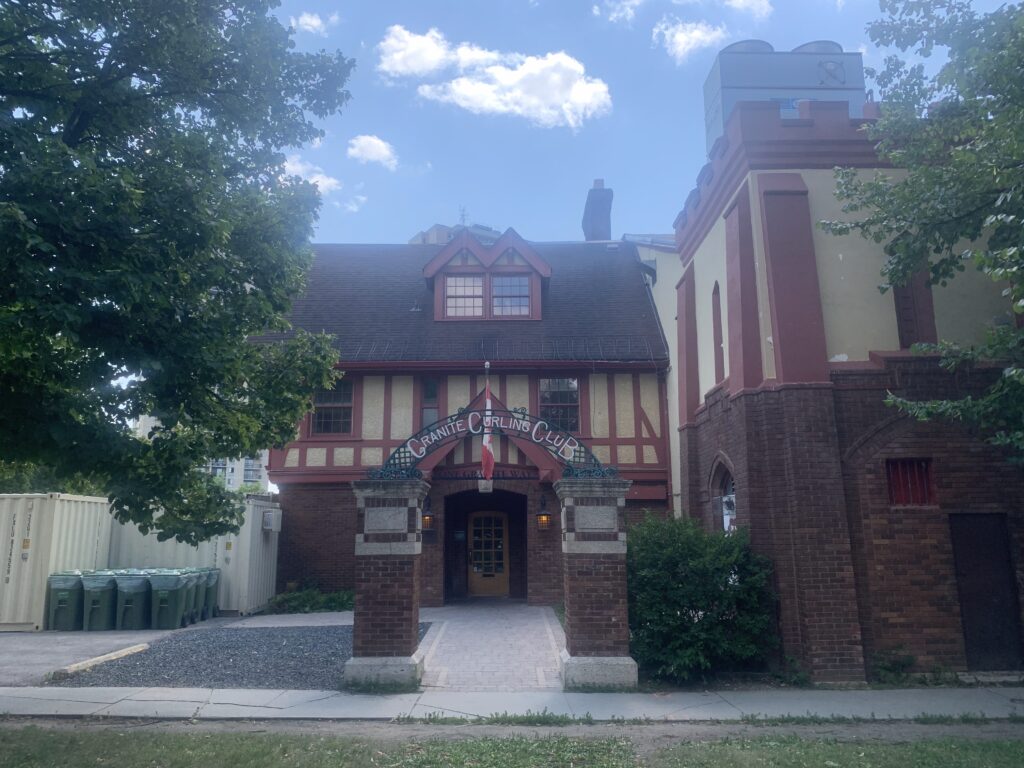
The Granite Curling Club entrance, July 31, 2026. Source: Heritage Winnipeg.
The Granite Curling Club has also taken the matter to the Manitoba Court of King’s Bench, seeking a judicial review of City Council’s approval. The club has argued that the City failed to adequately address parking concerns and meaningfully consult affected stakeholders before allowing the project to proceed.
The legal challenge follows an earlier direction from the Manitoba Municipal Board calling for the development of an adequate parking plan satisfactory to both the Granite Curling Club and the City.
The controversy highlights a broader challenge facing Winnipeg as the city seeks to encourage new housing while accommodating longstanding community institutions.
For Heritage Winnipeg, the issue is not opposition to new housing, but how development decisions are reached.
Growth and heritage do not have to be competing priorities. New development can help address Winnipeg’s housing needs while respecting the institutions and places that have long contributed to the character of surrounding neighbourhoods.
Achieving that balance requires a planning process that is open, collaborative and responsive to the people and organizations affected by development.
Public trust depends not only on the final outcome of planning decisions, but also on ensuring that communities have a meaningful opportunity to participate in the process.