










/ News

July 30, 2026
Holy Trinity Anglican Church Heritage Renewal Initiative Enters Phase 2
Heritage Winnipeg was pleased to attend yesterday’s announcement marking the launch of Phase 2 of the Holy Trinity Anglican Church Heritage Renewal Initiative.
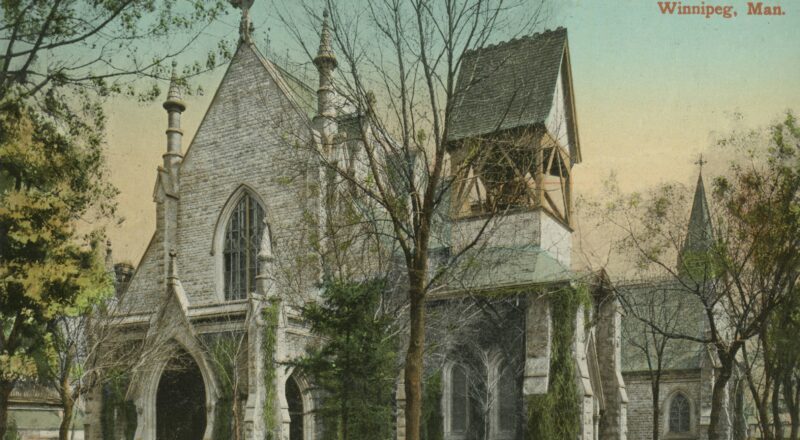
Located at 256 Smith Street in the heart of downtown Winnipeg, Holy Trinity Anglican Church was constructed between 1883 and 1884 to the designs of Winnipeg architect Charles H. Wheeler. Built of limestone in the High Victorian Gothic style, the church is recognized as one of the city’s finest examples of nineteenth-century ecclesiastical architecture. It is both a municipally designated historic building and a National Historic Site of Canada.
For more than 140 years, Holy Trinity has witnessed the evolution of downtown Winnipeg from open prairie to a commercial centre while also being an important place of worship, community gathering, music, remembrance, and service.
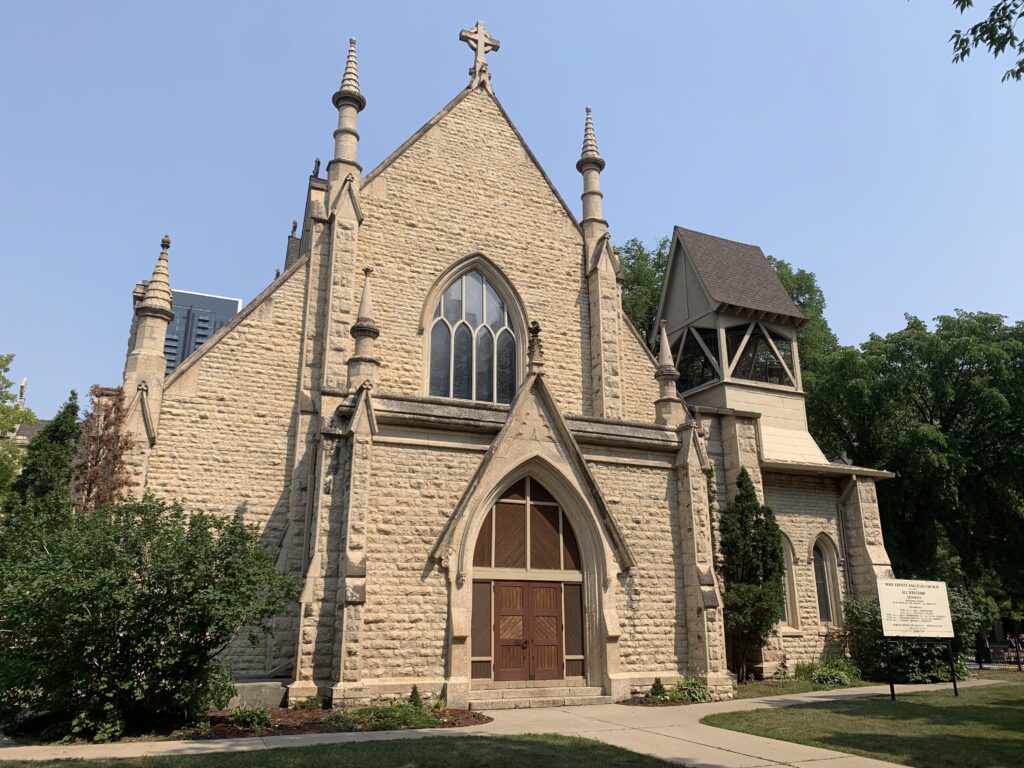
Holy Trinity Anglican Church, Donald St entrance, on July 29, 2026. Source: Heritage Winnipeg
The church was designed on a traditional cruciform plan; the building features steeply pitched roofs, pointed arches, dormer clerestory windows, buttresses, decorative finials, rough-cut Tyndall limestone walls, and an elaborate hammer-beam ceiling. Twenty-six stained-glass windows illuminate an interior that retains much of its original layout and furnishings, while memorial plaques commemorate parishioners and members of the Fort Garry Horse who lost their lives during the First and Second World Wars.
The first phase of the Heritage Renewal Initiative centred on a comprehensive assessment of the building’s condition, led by Monteyne Architecture. The assessment identified significant conservation work that has accumulated over many decades. The report outlines critical repairs, including foundation stabilization, structural reinforcement, roof repairs, and upgrades to mechanical and electrical systems.
Investigations discovered that differential settlement between the church’s original shallow stone foundation and the deeper foundation supporting the 1960s parish hall has contributed to cracking, uneven floors, and localized structural movement.
Following the completion of a comprehensive building assessment, the project is now entering its next phase. Phase 2 will focus on community and stakeholder consultations to help create a long-term future for the church and its surrounding property. The goal is to preserve the historic building while analyzing adaptive reuse that will ensure it remains active.
Over the coming months, the project team will undertake extensive consultation with the congregation, Indigenous leaders, governments, businesses, nearby residents, developers, investors, and other community stakeholders. The consultations will help inform conceptual designs and ensure Holy Trinity remains an accessible and sustainable part of downtown Winnipeg.
Instead of beginning with predetermined plans, the project utilizes a collaborative approach that recognizes that heritage conservation depends on community input. As project manager Stephen Borys noted during the announcement, great heritage projects are informed by evidence, shaped by people, and developed through collaboration.
-
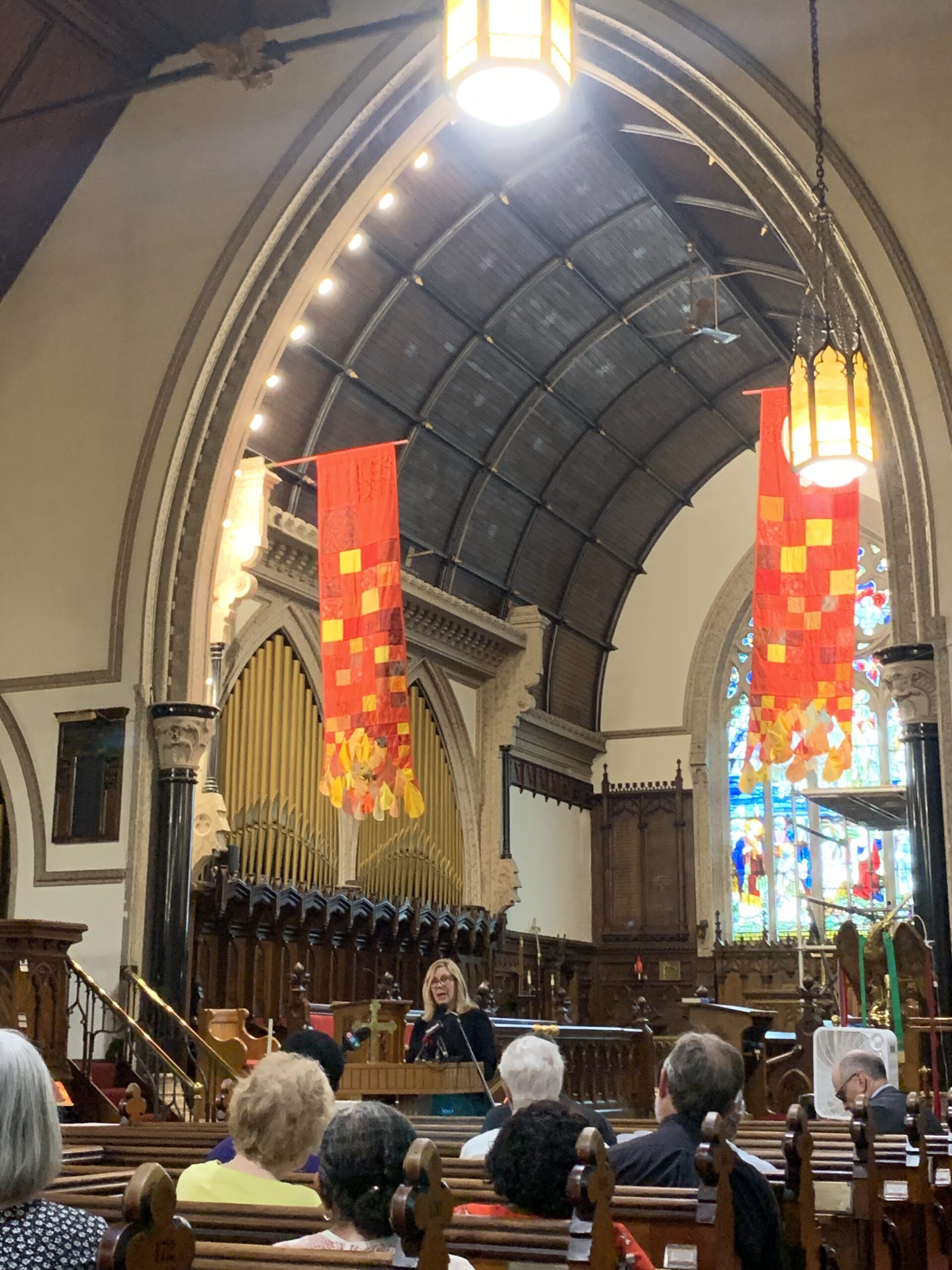
- CentreVenture Development Corporation President & CEO Rochelle Squires speaking inside the church, July 29, 2026. Source: Heritage Winnipeg
-
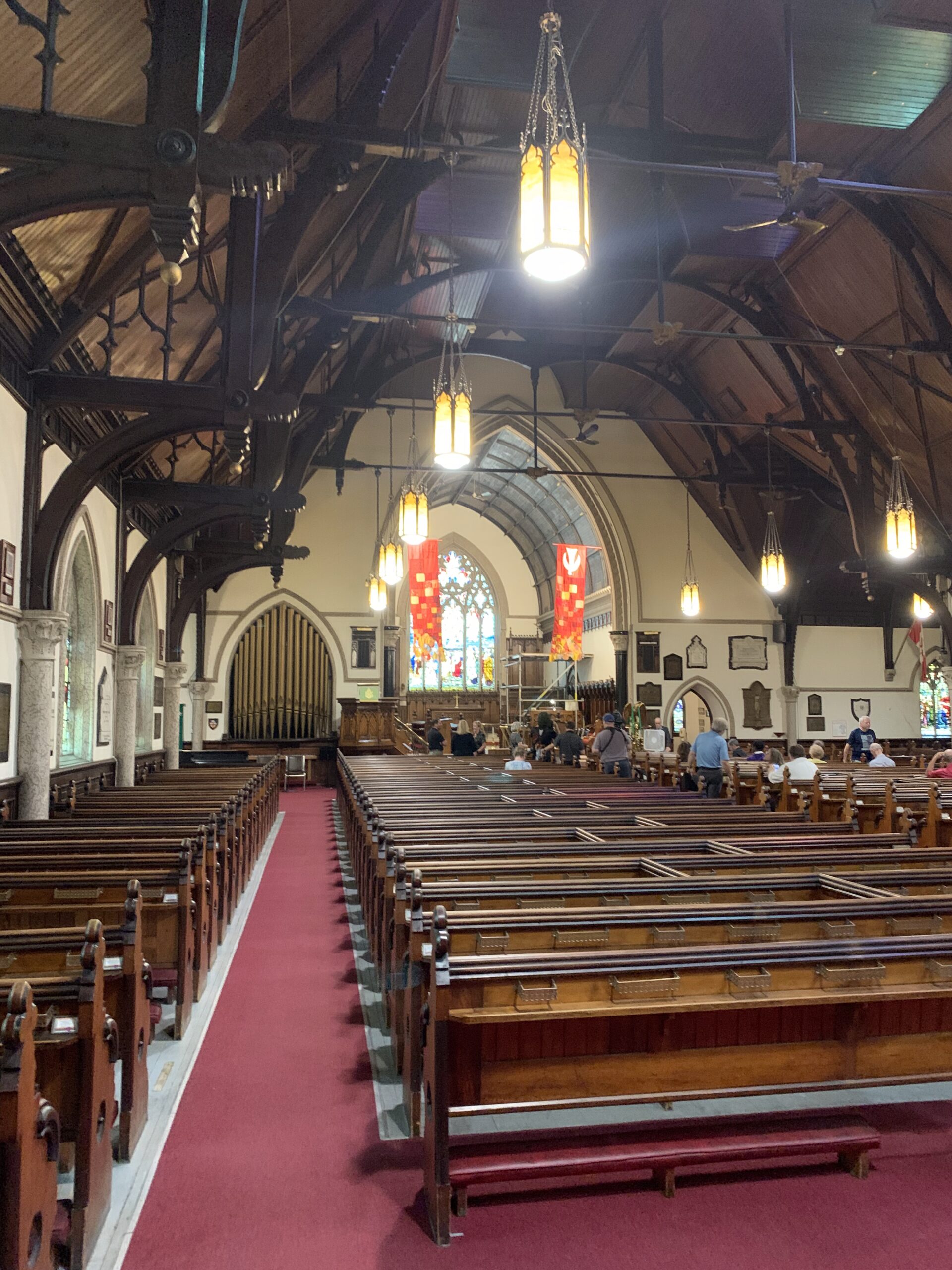
- The interior of the church, July 29, 2026. Source Heritage Winnipeg
Ideas include maintaining Holy Trinity as a place of worship while expanding community uses and considering development on underutilized portions of the property, including the surface parking lot. Similar adaptive reuse projects elsewhere in Winnipeg, such as the housing development at All Saints Church in West Broadway, demonstrate a good example of how historic places can evolve and preserve their heritage character.
Heritage Winnipeg executive director Cindy Tugwell elaborated in a statement to CityNews Winnipeg, “You can’t design the building till you really know how you’ve consulted with the community and stakeholders on how it will be utilized. So the renderings and the design will come after. But the consultations will be a big part of this second phase, knowing that this church can be revitalized and re-used.”
The Heritage Renewal Initiative is a collaborative undertaking involving Holy Trinity Anglican Church, CentreVenture Development Corporation, Civic Muse Inc., the Diocese of Rupert’s Land, and Monteyne Architecture. Phase 2 is supported through funding from CentreVenture, the Anglican Foundation of Canada, The Winnipeg Foundation, the Diocese of Rupert’s Land, and the Parish of Holy Trinity Anglican Church.
Conceptual designs and recommendations resulting from the consultation process are expected in the spring of 2027, after which project partners will begin discussions with potential development and funding partners. If planning and funding proceed as anticipated, critical foundation stabilization work could begin as early as 2029.
Heritage Winnipeg applauds the collaborative efforts of the Parish of Holy Trinity, the City of Winnipeg, CentreVenture, Civic Muse, the Diocese of Rupert’s Land, Monteyne Architecture, funding partners, and the many organizations involved in helping create a sustainable future for this historic place.
Heritage Winnipeg was proud to be part of yesterday’s important announcement.
We look forward to seeing the community come together to help ensure Holy Trinity continues to welcome future congregations.