










/ News

July 5, 2024
Six New Heritage Designations!
On July 4th, 2024 the City of Winnipeg Standing Policy Committee on Property and Development concurred with the recommendation of the Historical Buildings and Resources Committee and approved the addition of five buildings and one statue to the List of Historical Resources. These historical designations protect heritage from alteration of character defining elements or demolition. The following heritage properties were designated:
· Customs Examining Warehouse (145 McDermot Avenue)
· Fort Garry Library (1360 Pembina Highway)
· St. Boniface Public Library – Coronation Park Branch (120 Eugenie Street)
· St. Boniface Public Library – Provencher Park Branch (255 de la Cathedrale Avenue)
· Kildonan Park, Peguis Pavilion (2015 Main Street)
· Boy with the Boot Statue (460 Assiniboine Park Drive)
Heritage Winnipeg spoke in support of the designation of the St. Boniface Public Library – Provencher Park Branch at City Hall in April 2024 and is pleased to see the building being officially protected along with the other heritage properties. These designations represent great progress in the protection of municipally owned heritage, as all but the Customs Examining Warehouse are owned by the City of Winnipeg, with the statue in the care of the Assiniboine Park Conservancy. The Customs Examining Warehouse is owned by the federal government, which also supported the designation of its building. It is important for government to set a positive example for built heritage owners in the city, being good stewards of our community’s heritage. Additionally, it is wonderful to see more of Winnipeg’s modernist heritage being recognized for its importance, with the city having been a leader in the International Style (a modern architectural movement) post 1950. These outstanding and sometimes award winning modernist heritage buildings are also deserving of being celebrated and protected for future generations!
About the Heritage
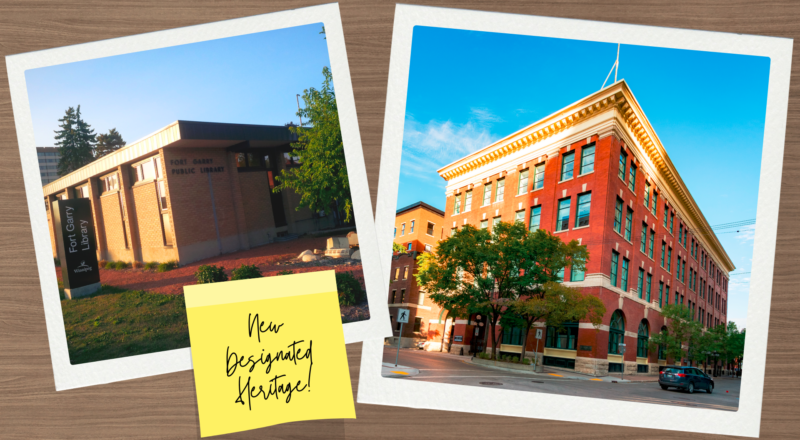
The Customs Examining Warehouse officially opened in August of 1910 after major changes in international trade three years prior resulted in greatly increased customs’ activities outgrowing the previous facility. The new building was a standard design by the Department of Public Works Staff of the Government of Canada, overseen by Chief Dominion Architect David Ewart. It is a rare pre-World War I Commercial Style building in Winnipeg, and is also an excellent example of the architectural style. A grand galvanize metal cornice overhangs four storeys of red brick that sit on a rusticated stone base, costing $276,000 to build with fireproof materials. It was once a hub of activity in the East Exchange District, the third largest port in Canada prior to World War I when measured in duties collected – over $11 million in 1912-1913! Used by various federal departments over the years, the building underwent a $5.9 million restoration and refit in 1992 with only the main floor lobby and stairwells retaining their original design. Outside, the building remains relatively unchanged, with some opening being closed or converted into doorways.
The Municipal Council of the Rural Municipality of Fort Garry passed a bylaw in November 1955 to allow for the establishment of a public library in the community. This paved the way for the Fort Garry Library, which opened on February 14th, 1960. Costing $85,000 to build, the new one storey library was designed by George A. Stewart in the International Style. The layout was intended to easily accommodate additions and featured a charming “Story Hour” courtyard in the southeast corner. Almost as soon as it had opened, the library was too small for the community, with additions to the southeast and northeast corners opening in May of 1967. While the additions where sympathetic to the original style of the building, the design of the facade was greatly altered in 2013 when all the windows were replaced and the distinctive briese soliel (louvered sun shade) was removed. Inside, modern upgrades allow the building to continue serving the community as a library. There is also now a collection of shards from demolished Winnipeg buildings displayed in the greenspace along the south and west sides of the library.
In 1952 the St. Boniface Public Library Board was created with the intention to operate French and English libraries for the community. Two libraries were established, one French and one English, but they were soon too small for the growing number of users. The St. Boniface Public Library – Coronation Park Branch was a new English facility that opened in November 1961 to replace one of the overcrowded old libraries. Located in the northeast corner of Coronation Park, it was designed in the International Style by Nikola Mathew Zunic and Victor Sobkowich. The one storey red brick building cost $59,900 to construct. It served the community as a library until a new facility opened in 1987. In good condition with minor alterations, the building is now used by a non profit organization.
The St. Boniface Public Library – Provencher Park Branch opened on November 26th, 1961. It was part of the same expansion of the library facilities as the St. Boniface Public Library – Coronation Park Branch. Serving the French speaking part of the community, the one storey building designed by Nikola Mathew Zunic and Victor Sobkowich cost $58,000 to built. It is another example of the International Style of architecture, embracing new materials and technologies while leaving historically based revival styles in the past. In the 1970s, it became Winnipeg’s central collection of French language library materials, leading to overcrowding. Its collections were eventually moved to a new facility in 1987. After water issues in the basement only five year after opening required major repairs, the building remains in good condition and is relatively unchanged, now serving the community as a senior centre.
The original pavilion in Kildonan Park was damaged by the 1950 spring flooding of the Red River. It was replaced with the Peguis Pavilion, which opened on August 20th, 1965. Designed by Morley Blankstein, it is a combination of the Brutalist Style and the International Style. The one storey building that celebrates the texture of concrete cost about $135,000 to build with distinctive waffle ceilings and four fireplaces. Its design received an honourable mention in the 1967 Manitoba Association of Architects design awards. Intended to be used all year, the building offered various food services, change room, washroom, offices and more. The landscaping was part of the building’s design, with a pond, bridges and paths making it a desirable destination for park goers. Major alterations were made to the main entrance in 2013, allowing the food services spaces to be more functional after sitting vacant for five years.
The Boy with the Boot Statue was erected as part of Queen Victoria’s Diamond Jubilee celebration. Unveiled on July 16th, 1898, it stood in front of Winnipeg’s Ginger Bread City Hall along with a bust of Queen Victoria set on a tall pillar in the foreground. The original artist and their inspiration is unknown, although it is thought that the bronze statue was cast in Italy. Several other versions of the statue exist throughout the world, with the Winnipeg statue being the only one known in Canada. The Boy with the Boot was moved to the Duck Pond in Assiniboine Park in 1913 to make way for a new driveway at City Hall. In 1952 the statue moved again, this time to the new formal entrance of the English Garden in Assiniboine Park. Despite a brief dispute over paying for the statue’s fountain feature water when it was initially unveiled, the boy’s boot going missing at one time and the entire 140 kilogram statue being stolen by a fraternity in 1994, the statue remains in good condition and is a landmark in one of Winnipeg’s grandest parks.
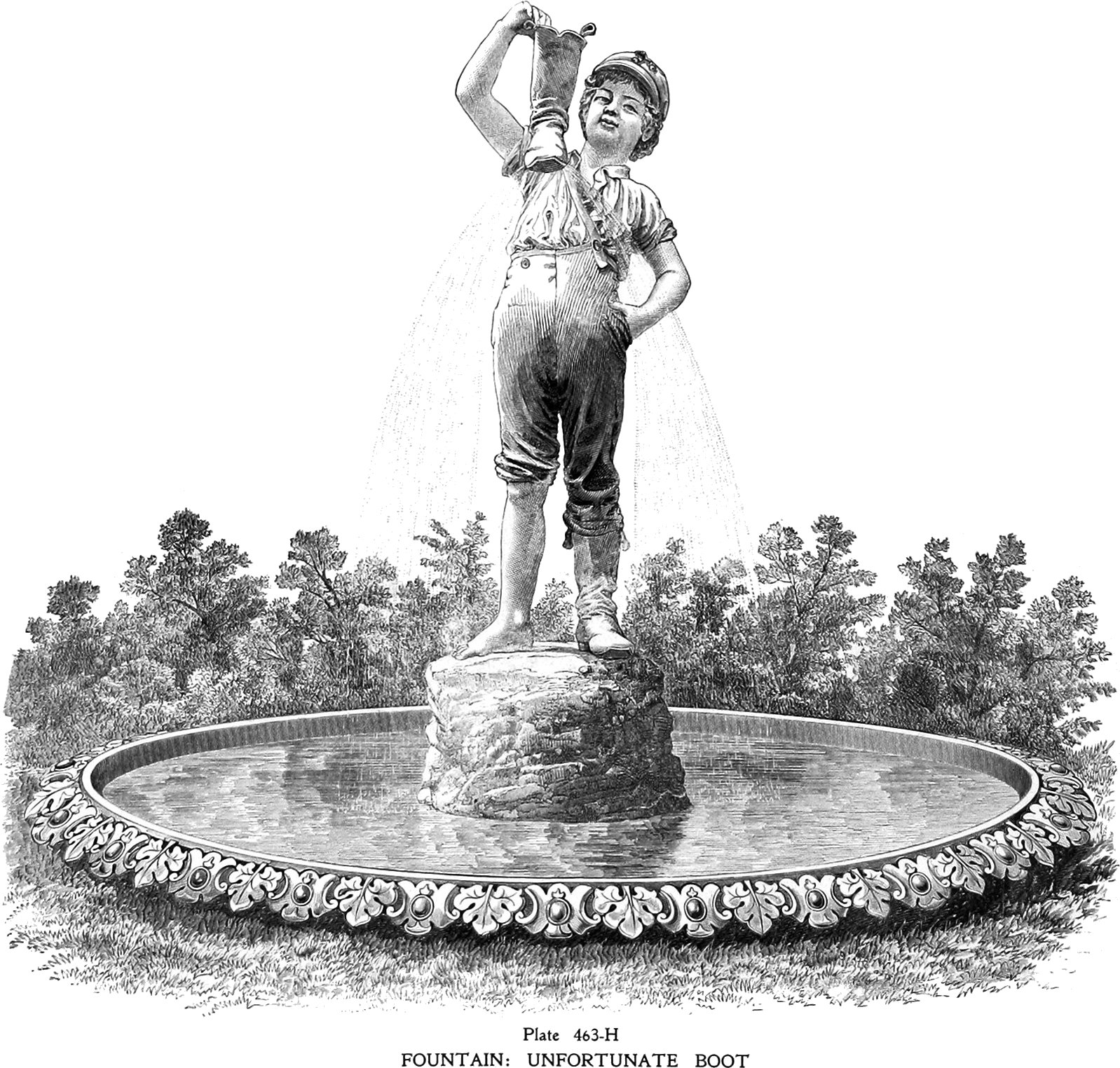
An illustration of the Boy with the Boot Statue from the 1925 J.L. Mott Iron Works Company of New York catalog on page 106.
Source: Lezumbalaberenjena (CC BY-SA 3.0, via Wikimedia Commons)
Feature images:
Fort Garry Library (1360 Pembina Highway) in August 2018 from Jimj wpg (CC BY-SA 4.0, via Wikimedia Commons)
Customs Examining Warehouse (145 McDermot Avenue) in September 2017 from Jessica Losorata (CC BY-SA 4.0, via Wikimedia Commons)
Past articles on Heritage Designations:
May 17th, 2024: “City Buildings Move Forward for Designation”
January 10th, 2023: “Advocacy Achievement! Celebrating Two New Heritage Designations”